Hello Reader!
Welcome to the blog page of Greenship Services, the asbestos removal service in India.
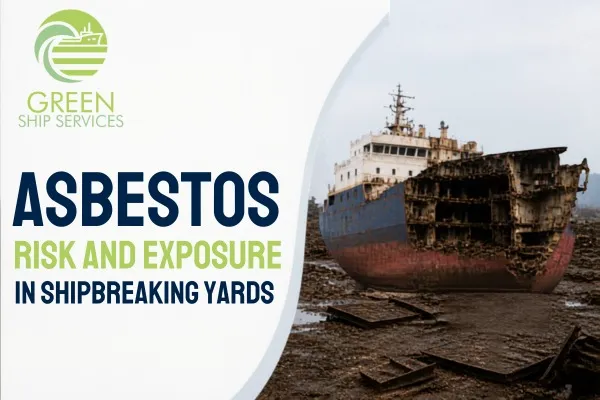
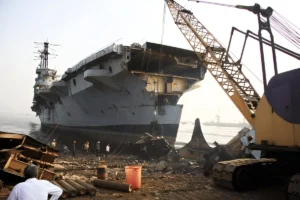
Shipbreaking yards play a crucial role in recycling decommissioned vessels and recovering valuable materials like steel and machinery. However, behind this economically significant industry lies a serious occupational and environmental hazard—Asbestos Risk and Exposure. For decades, ships were constructed using asbestos-containing materials due to their heat resistance, insulation properties, and durability. Today, dismantling these ships exposes workers and surrounding communities to dangerous health risks.
At Greenship Services, a leading Asbestos Removal Service in India, we aim to raise awareness about these risks and promote safe, compliant asbestos management practices.
What is Asbestos and Why Was It Used in Ships?
Asbestos is a naturally occurring mineral widely used in shipbuilding from the 1930s to the 1980s. It was commonly found in:
- Insulation materials (pipes, boilers, engine rooms)
- Fireproofing systems
- Floor tiles and adhesives
- Gaskets and seals
- Electrical wiring insulation
Its fire-resistant and insulating properties made it an ideal material for maritime vessels. However, once disturbed, asbestos releases microscopic fibers into the air, leading to severe health hazards.
Understanding Asbestos Risk and Exposure in Shipbreaking Yards
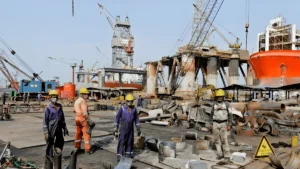
Shipbreaking involves cutting, dismantling, and recycling old ships—often in open yards with limited safety measures. This process significantly increases Asbestos Risk and Exposure, particularly when:
- Asbestos-containing materials are broken or cut
- Dust is generated during dismantling
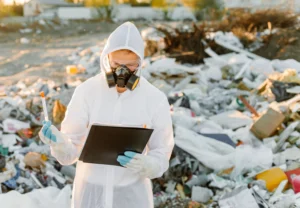
- Workers lack protective gear
- There is inadequate ventilation or containment
Workers may inhale airborne asbestos fibers or ingest them through contaminated food, water, or hands.
Health Hazards Associated with Asbestos Exposure
Long-term Asbestos Risk and Exposure can lead to life-threatening diseases, including:
1. Asbestosis
A chronic lung disease caused by inhaling asbestos fibers, leading to lung scarring and breathing difficulties.
2. Mesothelioma
A rare and aggressive cancer affecting the lining of the lungs or abdomen, almost exclusively caused by asbestos exposure.
3. Lung Cancer
Prolonged exposure significantly increases the risk, especially among smokers.
4. Pleural Thickening
Thickening of the lung lining, causing chest pain and reduced lung function.
These conditions often take decades to develop, making early prevention and control critical.
Environmental Impact of Asbestos in Shipbreaking
Improper handling of asbestos not only affects workers but also contaminates:
- Soil: Asbestos fibers settle into the ground, making it hazardous
- Water bodies: Runoff can carry fibers into nearby rivers and oceans
- Air quality: Dust can spread to nearby communities
This widespread contamination underscores the urgent need for professional Asbestos Removal Service in India to mitigate environmental damage.
Challenges in Managing Asbestos in Shipbreaking Yards
Despite the known dangers, several challenges persist:
- Lack of awareness among workers
- Informal and unregulated dismantling practices
- Insufficient training and protective equipment
- Weak enforcement of safety regulations
- High costs of proper disposal
Addressing these issues requires a combination of policy enforcement, worker education, and expert intervention.
Importance of Professional Asbestos Removal
Hiring a certified Asbestos Removal Service in India like Greenship Services is essential for:
Safe Identification
Using advanced techniques to detect asbestos-containing materials accurately.
Controlled Removal
Ensuring asbestos is removed without releasing harmful fibers into the air.
Proper Disposal
Transporting and disposing of asbestos waste in compliance with environmental regulations.
Worker Safety
Providing protective equipment and following strict safety protocols.
Regulatory Compliance
Adhering to national and international guidelines for hazardous material handling.
Also Read: Step-by-Step Guide to the Ship Dismantling Process
How to safely remove asbestos from ships in India?
Safely removing asbestos from ships in India requires a structured, regulated process that limits fibre release, protects workers, and ensures environmentally sound disposal. The key is to treat asbestos‑containing materials (ACMs) as hazardous from the outset and involve a licensed asbestos removal service in India rather than relying on informal labour. Below is a step‑by‑step guide tailored to Indian ship‑recycling and ship‑maintenance contexts.
1. Confirm the presence of asbestos
Before any work begins, use this sequence:
- Survey and lab testing: If ACMs are suspected (insulation, gaskets, pipes, fire‑proofing, floor tiles), take samples in sealed containers and send them to a certified lab to confirm asbestos content.
- Create an Asbestos Inventory / IHM: For ships destined for recycling, prepare or update the Inventory of Hazardous Materials (IHM) listing location, type, and condition of ACMs.
This step minimises accidental disturbance and defines the scope of removal.
2. Plan and isolate the work area
Poor containment dramatically increases asbestos risk and exposure in shipbreaking yards. In India‑compliant yards, safe removal follows these principles:
- Designate a controlled area: Isolate the engine room, boiler spaces, pipe tunnels, or other ACM‑rich zones with physical barriers and warning signs (“Danger: Asbestos”).
- Use negative‑pressure enclosures (where practical): Onboard or in dedicated abatement bays, flexible enclosures with air filtration can capture airborne fibres.
- Minimise work on windy or dusty days: Avoid operations that can blow fibres into open yards or nearby communities.
Pre‑planning with a professional asbestos removal service in India ensures that engineering controls match ship‑specific layouts.
3. Use safe removal techniques onboard
The goal is to remove ACMs intact and with minimal dust. Recommended methods include:
- Wet‑method removal: Lightly mist ACMs with water or a surfactant solution before cutting or removing to suppress fibre release.
- Minimise mechanical breaking: Use sharp cutting tools instead of chisels or brute force; avoid grinding, scabbling, or high‑pressure air.
- Gentle removal of gaskets, blankets, and pipe insulation: Remove joints and insulation in whole pieces instead of scraping or crushing.
For ships still in service, options such as encapsulation or enclosure may be used until full removal can be scheduled, always under the supervision of a certified contractor.
4. Protect workers with strict PPE and procedures
In Indian ship‑recycling yards, trained hazardous‑materials teams now use PPE well beyond basic cover‑all gear.
Safe worker‑protection practices include:
- Full PPE: Respirators (P3 or equivalent), disposable overalls, gloves, safety goggles, and boots.
- Decontamination protocols: On exit from the ACM area, workers shower or at least wash hands and face and change clothes before leaving the yard.
- No eating/drinking in contaminated zones: Prevent oral ingestion of fibres and “take‑home” contamination.
Only trained, certified asbestos handlers should be allowed in ACM work areas, consistent with international guidelines.
5. Pack and label asbestos waste correctly
Once removed, asbestos must be handled as hazardous waste, not general construction debris.
- Double‑bag in thick plastic: Use 200‑micron polythene bags, sealed and labelled with “Asbestos – Hazardous Material – Do Not Open”.
- Wet and stabilise bulk waste: For large quantities, mix asbestos with cement or a stabilising agent to form solid blocks, greatly reducing dust risk.
- Temporary storage: Keep waste in a secure, covered, labelled area away from the public and other operations until transport.
Unlicensed dumping or open‑air storage is illegal and increases asbestos risk and exposure for nearby communities.
6. Transport and dispose via authorised channels
In India, transfer of asbestos waste must follow national and state‑level hazardous‑waste rules.
- Use authorised transporters and vehicles: Waste should be transported in sealed containers with correct documentation (e.g., hazardous‑waste manifest).
- Engineered landfill disposal: Deliver asbestos blocks or bags to permitted facilities with HDPE liners and engineered cells (e.g., GEPIL‑type landfills), not ordinary dumpsites.
Choosing a competent asbestos removal service in India ensures that paperwork, labelling, and disposal routes remain compliant.
7. Clean, verify, and document completion
After removal, the area must be cleaned and verified to prevent residual contamination.
- HEPA vacuuming and wet wiping: Use HEPA‑filtered vacuum cleaners and alcohol‑based wipes on surfaces instead of sweeping or dry mopping.
- Air clearance testing (if required): In high‑risk or enclosed spaces, conduct fibre‑monitoring to confirm airborne levels are within safe limits.
- Documentation: Maintain records of surveys, removal reports, lab tests, and disposal certificates for compliance audits and future IHM updates.
These steps are routinely followed by professional asbestos abatement providers serving ships and ship‑recycling yards in India.
8. When to call a professional asbestos removal service in India
Given the complexity and legal requirements, it is strongly recommended to involve a licensed asbestos removal service in India for:
- Large‑scale ACM removal from engines, boilers, and pipe systems.
- Pre‑dismantling de‑asbestos removal from end‑of‑life vessels before shipbreaking.
- IHM‑compliant asbestos surveys and abatement for ships in service or entering Indian yards.
By following these steps, Indian shipyards, ports, and shipowners can remove asbestos in a manner that reduces asbestos risk and exposure, protects worker health, and meets both national and international regulations.
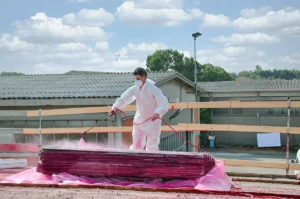
Best Practices to Reduce Asbestos Risk and Exposure
To minimize Asbestos Risk and Exposure in shipbreaking yards, the following measures should be implemented:
- Conduct pre-dismantling asbestos surveys
- Use wet methods to suppress dust
- Provide personal protective equipment (PPE)
- Train workers on asbestos hazards
- Establish containment zones
- Ensure proper waste labeling and disposal
- Regular health monitoring of workers
Role of Greenship Services
At Greenship Services, we specialize in delivering reliable and safe Asbestos Removal Service in India. Our team is equipped with:
- Certified professionals
- Advanced removal technology
- Strict adherence to safety standards
- Eco-friendly disposal methods
We are committed to protecting both human health and the environment by effectively managing Asbestos Risk and Exposure across industries, including shipbreaking.
What are the symptoms of asbestos-related diseases?
Asbestos‑related diseases often appear many years (sometimes decades) after exposure, and early symptoms can mimic common colds or other lung problems. It is important to seek medical evaluation if you have a history of asbestos exposure and develop persistent respiratory or systemic symptoms.
Common early warning signs
In general, early symptoms of asbestos‑related diseases include:
- Shortness of breath, especially on exertion.
- A persistent, dry cough that does not go away.
- Chest pain or tightness.
- Fatigue or feeling unusually tired.
- Unexplained weight loss or loss of appetite.
These signs may be mild at first and slowly worsen over time, so people often dismiss them until lung function is significantly reduced.
Symptoms of asbestosis
Asbestosis is a chronic lung disease caused by scarring (fibrosis) from inhaled asbestos fibres. Typical symptoms include:
- Progressive shortness of breath, starting with exercise and later occurring at rest.
- Persistent dry cough.
- Chest tightness or a feeling of heaviness.
- A dry, crackling sound heard in the lungs when breathing in.
- Clubbing of fingers or toes (fingertips and toes become wider and rounder).
Because asbestosis develops slowly, symptoms often appear 10–30 or more years after exposure.
Symptoms of asbestos‑related lung cancer
Lung cancer linked to asbestos can cause:
- A new or changing cough, sometimes with blood in the sputum.
- Ongoing chest pain.
- Shortness of breath or wheezing.
- Unexplained weight loss and fatigue.
- Hoarseness or frequent respiratory infections.
Risk is greatly increased if the person also smokes.
Symptoms of mesothelioma
Mesothelioma is a cancer of the lining of the lungs (pleural) or abdomen (peritoneal). Common symptoms include:
- Pleural type:
- Shortness of breath due to fluid in the chest (pleural effusion).
- Chest pain, especially on breathing deeply.
- Persistent cough and unexplained weight loss.
- Peritoneal type (abdominal):
- Abdominal swelling or bloating.
- Belly pain, nausea, and weight loss.
Like other asbestos‑related conditions, mesothelioma usually appears 20–50 years after exposure.
Other asbestos‑related changes
- Pleural plaques: Thickened patches on the lining of the lungs, often found on imaging; they may cause no or only mild symptoms such as slight breathlessness.
- Pleural thickening / effusion: Can cause chest pain and shortness of breath when the lining becomes scarred or filled with fluid.
When to see a doctor
If you have any history of asbestos exposure (e.g., shipbreaking, construction, insulation work, asbestos removal) and develop:
- A persistent cough,
- Shortness of breath,
- Chest pain, or
- Unexplained weight loss or fatigue,
you should consult a chest specialist or occupational‑health doctor and mention your asbestos history. Early diagnosis improves the chances of managing symptoms and planning appropriate treatment.

FAQ
1. What is asbestos and why is it found in old ships?
Asbestos is a heat-resistant mineral that was widely used in older ships for insulation, fireproofing, and durability, especially in engine rooms and piping systems.
2. How are workers exposed to asbestos in shipbreaking yards?
Workers are exposed when asbestos-containing materials are cut, broken, or disturbed, releasing harmful fibers into the air that can be inhaled.
3. What health problems can asbestos exposure cause?
Long-term exposure can lead to serious diseases like asbestosis, lung cancer, and mesothelioma, often developing years after exposure.
4. Why is asbestos exposure a major concern in shipbreaking industries?
Many shipbreaking yards lack proper safety measures, increasing the risk of uncontrolled asbestos exposure for workers and nearby communities.
5. How can asbestos risk and exposure be reduced in shipbreaking yards?
Risks can be minimized through proper identification, use of protective equipment, safe removal practices, and hiring professional asbestos removal services.
Conclusion
Shipbreaking is a necessary industry, but it must not come at the cost of human lives and environmental safety. The dangers of Asbestos Risk and Exposure are real and long-lasting, but they are also preventable with the right approach. By partnering with an experienced Asbestos Removal Service in India like Greenship Services, shipbreaking yards can ensure safer operations, regulatory compliance, and a healthier future for workers and communities alike.