Hello Reader!
Welcome to the blog page of Greenship Services, an asbestos removal service in India.
The maritime industry has a long history of using asbestos due to its excellent fire-resistant and insulating properties. For decades, asbestos was commonly installed in ship engines, boilers, insulation panels, pipes, ceilings, flooring, and fireproof coatings. However, prolonged exposure to asbestos fibers is now known to cause serious health hazards, making Asbestos removal on ships a critical and highly regulated process today.
At Greenship Services, a trusted Asbestos Removal Service in India, we understand the complexities, risks, and technical challenges involved in safely handling asbestos on marine vessels. This blog explores the major risks and challenges associated with asbestos removal on ships and why professional expertise is essential.
Understanding Asbestos Use in Ships
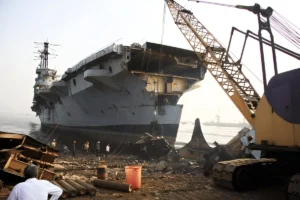
Ships built before the late 1990s often contain asbestos in multiple components. Due to constant vibration, heat, and aging, these materials can deteriorate over time, releasing microscopic asbestos fibers into the air. During repair, retrofitting, or dismantling activities, the risk of fiber release increases significantly, making Asbestos removal on ships a high-risk operation.
Major Health Risks of Asbestos Exposure
One of the biggest risks associated with Asbestos removal on ships is the severe impact on human health. Inhalation of asbestos fibers can lead to life-threatening diseases such as:
- Asbestosis
- Lung cancer
- Mesothelioma
- Pleural thickening
Shipyard workers, marine engineers, and asbestos removal technicians are particularly vulnerable if proper safety measures are not followed. This is why engaging a certified Asbestos Removal Service in India is crucial for safe operations.
Key Challenges in Asbestos Removal on Ships
1. Confined and Complex Spaces
Ships are filled with narrow corridors, enclosed engine rooms, and hard-to-access compartments. Performing Asbestos removal on ships in such confined spaces increases the difficulty of containment, ventilation, and safe material handling.
2. Risk of Fiber Contamination
Asbestos fibers are extremely light and can easily spread throughout the vessel if disturbed improperly. Preventing cross-contamination between work zones is a major challenge and requires specialized containment systems and negative pressure units.
3. Strict Regulatory Compliance
Maritime asbestos removal must comply with national and international safety regulations, including ship recycling and occupational health standards. Non-compliance can result in heavy penalties, project delays, and serious legal consequences. A professional Asbestos Removal Service in India ensures all guidelines are followed meticulously.
4. Disposal and Waste Management
Safe disposal of asbestos waste is another major challenge. Removed asbestos must be sealed, labeled, transported, and disposed of at authorized hazardous waste facilities. Improper disposal poses environmental and public health risks.
5. Operational Downtime
Asbestos removal often requires ships to be taken out of service temporarily. Efficient planning and execution are essential to minimize downtime while maintaining safety during Asbestos removal on ships.

Environmental Risks and Challenges
If asbestos fibers escape into the marine environment, they can contaminate surrounding water and port areas. Environmental protection is therefore a critical component of every Asbestos Removal Service in India. Controlled removal, air monitoring, and proper waste containment help reduce environmental impact.
Importance of Professional Asbestos Removal Services
Due to the high risks involved, Asbestos removal on ships should never be attempted without trained professionals. Experienced service providers use:
- Certified protective equipment (PPE)
- Advanced containment and ventilation systems
- Air quality monitoring tools
- Trained and licensed asbestos removal teams
At Greenship Services, we specialize in delivering safe, compliant, and efficient asbestos solutions, making us a reliable Asbestos Removal Service in India for marine and offshore projects.
What are the common locations of asbestos on ships?
Asbestos was used extensively on ships built before the late 1980s–early 2000s, mainly for its heat resistance, fireproofing, and insulation properties. On many older vessels still in service or under repair, the most common locations of asbestos are in high‑heat, high‑risk machinery and structural areas.
Below are the typical locations where asbestos is commonly found on ships:
1. Engine rooms and boiler rooms
These are classic “hot zones” where asbestos‑containing insulation was wrapped around:
- Boilers and steam generators
- Engines and turbines
- Hot pipes carrying steam, hot water, or exhaust gases
The goal was to keep heat inside and protect surrounding metal and electrical components, but this also created a major exposure risk for mechanics and engineers.
2. Piping and ductwork
Asbestos was used on:
- Steam and hot‑water pipes, with lagging insulation and cloth wraps
- Ducts and flue systems carrying hot air or exhaust gases
- Pipe joints using asbestos gaskets, packing, and seals
In cramped engine or boiler rooms, these insulated pipes line the spaces and are often touched or disturbed during maintenance.
3. Electrical systems and switchboards
Asbestos was used in:
- Electrical wiring and cable insulation
- Switchgear, panels, and board linings
- Fire‑resistant enclosures and sleeves
These components were installed near high‑temperature equipment or in areas where fire risk was high.
4. Deck coverings and flooring
On many ships, asbestos appears in:
- Vinyl or composition floor tiles
- Adhesives and mastics used to fix tiles
- Deck coverings and linoleum‑type sheet flooring
These materials can release fibres when tiles are cut, shattered, or when old adhesive is scraped during renovations.
5. Structural and fire‑resistant linings
Asbestos‑containing materials were incorporated into:
- Bulkheads and partitions for fire‑resistance
- Ceiling and wall panels or insulation boards
- Fire doors and fireproof linings in engine rooms and stairways
These were designed to delay fire spread but can be disturbed during repairs or refits.
6. Firefighting equipment and protective gear
Some older ships used:
- Asbestos‑containing fire blankets and pads
- Fireproof suits and gloves for firefighters
- Fire‑resistant covers around critical equipment
These materials degrade over time, especially in salty, humid marine environments.
7. Equipment gaskets, packing, and seals
Asbestos was widely used in:
- Gaskets for valves, flanges, and pipe joints
- Packing materials for pumps, compressors, and valves
- Seals around rotating machinery
These components are frequently replaced during routine maintenance, creating a significant risk of fibre release if not managed with proper asbestos removal procedures.
For any Asbestos Removal Service in India working on ships, knowing these common locations is crucial: surveys must focus on engine and boiler spaces, piping runs, electrical areas, flooring, and structural linings to ensure hidden asbestos is not overlooked during repairs or decommissioning.
Also Read: Complete Guide to IHM Maintenance: Best Practices for 2026
Latest IMO regulations for asbestos management on vessels
The latest International Maritime Organization (IMO) rules treat asbestos as a strictly controlled, largely prohibited material on ships, with a strong focus on preventing new installations and managing existing asbestos safely. These controls are implemented through amendments to the SOLAS 1974 convention and supporting IMO circulars.
Below is a concise overview of the current key IMO‑based regulations for asbestos management on vessels.
1. General ban on new asbestos installations
SOLAS Chapter II‑1, Regulation 3‑5, prohibits new installation of materials containing asbestos on all ships, with very limited exceptions.
Permitted exceptions include:
- Vane material in rotary vane compressors and rotary vane vacuum pumps.
- Watertight joints and linings used for fluids at high temperature (above 350°C) or high pressure (above 70 bar), where there is a risk of fire, corrosion, or toxicity.
- Supple and flexible thermal insulation assemblies used at temperatures above 1000°C.
In practice, this means shipbuilders and repair yards are expected to use asbestos‑free alternatives whenever possible, and any continued use must be justified and documented.
2. Three‑tier approach based on ship construction date
IMO‑SOLAS rules are applied according to when the ship was built.
- Ships built before 1 July 2002 (Category 1)
- Existing asbestos is allowed only if it is in good condition and remains encapsulated or sealed.
- Shipowners must carry out an asbestos survey and maintain an inventory of hazardous materials (IHM Part I) that includes asbestos‑containing materials (ACMs).
- Ships built between 1 July 2002 and 31 December 2010 (Category 2)
- New installation of asbestos is prohibited.
- If asbestos is found, it must be safely removed within three years, unless a temporary exemption is granted by the flag state.
- Ships built on or after 1 January 2011 (Category 3)
- All new installation of asbestos is banned without exception.
- If asbestos is detected on such a vessel, the shipowner must notify the flag state; the flag may issue an exemption or a time‑limited removal plan under procedures in MSC/Circ.1374 and MSC/Circ.1045.
3. Inventory of Hazardous Materials (IHM) and Hong Kong Convention
Under the Hong Kong International Convention for the Safe and Environmentally Sound Recycling of Ships (entered into force 26 June 2025), ships must have an IHM Part I that lists all hazardous materials, including asbestos.
- The inventory must be based on:
- Design and construction records.
- On‑board surveys and sampling.
- Information from the shipyard and suppliers.
- The IHM must be kept on board and updated whenever significant repairs or modifications are carried out.
This affects every Asbestos Removal Service in India involved in ship‑repair or pre‑demolition work, because ACMs must be identified, documented, and removed safely before recycling.
4. Operational management of existing asbestos
Even where asbestos is allowed (older ships), IMO and SOLAS‑derived guidance stress that:
- Existing asbestos must be secured, sealed, or encapsulated to prevent fibre release.
- If ACMs are deteriorating or must be disturbed (e.g., during repairs), the shipowner must:
- Plan removal or covering operations in line with MSC/Circ.1045 (practical guidance on asbestos survey, removal, and air monitoring).
- Ensure workers are trained and PPE‑compliant, and that air monitoring is carried out before, during, and after work.
Ports and flag states are increasingly strict; if Port State Control (PSC) finds uncontrolled asbestos or non‑compliant IHM/ACM management, the ship can be detained or issued a mandatory rectification order.
5. Implications for Asbestos Removal Service in India
For an Asbestos Removal Service in India working on Indian or foreign‑flagged vessels, the latest IMO rules mean:
- You must work within the ship‑specific asbestos inventory and IHM.
- You must follow SOLAS‑aligned methods for removal, containment, air monitoring, and waste disposal.
- You should liaise with:
- The shipowner.
- The flag‑state authority.
- The classification society or RO (Recognition Organisation).
This framework ensures that asbestos removal on ships is not only safe but also compliant with international obligations, helping shipowners avoid detentions, fines, or recycling‑related issues.
If you tell us the ship type (e.g., cargo, tanker, offshore) and flag, we can outline a more specific, step‑by‑step compliance checklist tailored for your operations.
The Role of Training and Expertise
Continuous training is essential for keeping up with evolving regulations and safety protocols. Skilled professionals are trained to identify asbestos-containing materials, assess risks, and execute removal with minimal exposure—an essential factor in successful Asbestos removal on ships.

FAQ
- Why is asbestos removal on ships considered high risk?
Asbestos removal on ships is risky because disturbing asbestos-containing materials can release harmful fibers in confined ship spaces, leading to serious health hazards.
- What health risks are involved during asbestos removal on ships?
Exposure to asbestos fibers can cause severe diseases such as asbestosis, lung cancer, and mesothelioma if proper safety measures are not followed.
- What are the main challenges faced during asbestos removal on ships?
Key challenges include confined working areas, risk of fiber contamination, strict regulatory compliance, safe waste disposal, and minimizing ship downtime.
- Why should professional services handle asbestos removal on ships?
Professional services use trained personnel, certified safety equipment, containment systems, and follow legal guidelines to ensure safe and compliant asbestos removal on ships.
- How can ship owners reduce risks during asbestos removal?
Ship owners can reduce risks by hiring an experienced Greenship Services, a reliable Asbestos Removal Service in India that ensures safety, compliance, and environmental protection.
Conclusion
The risks and challenges associated with Asbestos removal on ships are significant, ranging from serious health hazards to environmental and regulatory concerns. Addressing these challenges requires expertise, planning, and strict adherence to safety standards.
By choosing Greenship Services, you partner with a dependable Asbestos Removal Service in India committed to safety, compliance, and environmental responsibility. Professional asbestos removal not only protects workers and ship owners but also ensures a safer maritime future.