Hello Reader!
Welcome to the blog page of Greenship Services, the Asbestos removal service in India.
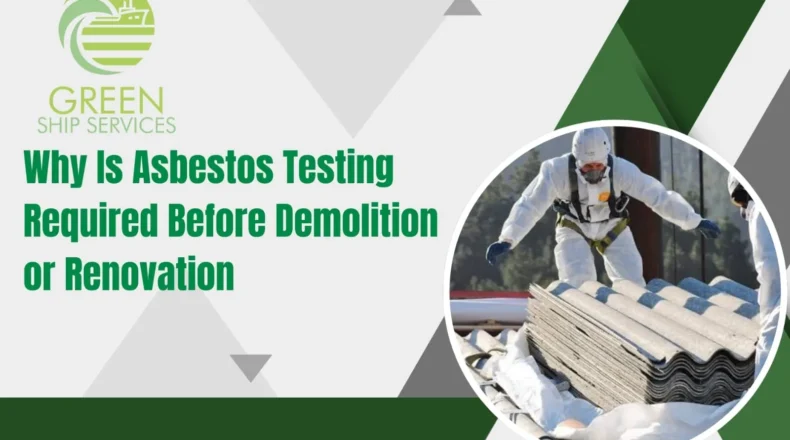
When planning a demolition or renovation project, most property owners focus on design, budget, and timelines. However, one crucial step that is often overlooked is Asbestos testing. Whether it’s an old residential building, commercial complex, factory, or shipyard structure, identifying asbestos before starting work is not just recommended—it is essential for safety, legal compliance, and environmental responsibility.
As a trusted Asbestos Removal Service in India, Greenship Services strongly emphasizes the importance of proper inspection and testing before any structural alteration begins. Let’s understand why this step is absolutely critical.
What Is Asbestos and Why Is It Dangerous?
Asbestos is a group of naturally occurring fibrous minerals widely used in construction materials until the late 20th century. It was popular because of its:
- Heat resistance
- Fireproofing properties
- Strength and durability
- Insulation capabilities
You can commonly find asbestos in:
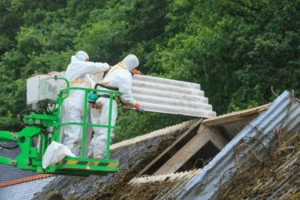
- Roofing sheets
- Ceiling tiles
- Floor tiles
- Insulation materials
- Cement products
- Pipe insulation
However, when asbestos-containing materials are disturbed during demolition or renovation, microscopic fibers become airborne. Inhalation of these fibers can cause serious diseases such as:
- Asbestosis
- Lung cancer
- Mesothelioma
These diseases may take years to develop but are often life-threatening.
This is why Asbestos testing is mandatory before any renovation or demolition activity begins.
Why Is Asbestos Testing Required Before Demolition or Renovation?
1. To Protect Workers and Occupants
Demolition and renovation activities involve breaking walls, cutting materials, and removing structural components. If asbestos is present and not identified through proper Asbestos testing, workers may unknowingly inhale harmful fibers.
A professional Asbestos Removal Service in India ensures that:
- Samples are collected safely
- Laboratory analysis confirms the presence of asbestos
- Proper containment procedures are followed
This protects construction workers, residents, and nearby communities.
2. Legal and Regulatory Compliance
In India, environmental and occupational safety guidelines require proper handling of hazardous materials like asbestos. Failure to conduct Asbestos testing before demolition can result in:
- Legal penalties
- Project shutdown
- Environmental violations
- Hefty fines
Hiring a certified Asbestos Removal Service in India ensures compliance with safety regulations and avoids legal complications.
3. Prevent Environmental Contamination
When asbestos fibers are released into the air, they can spread beyond the demolition site, contaminating soil and surrounding properties.
Without proper Asbestos testing, demolition debris may mix hazardous materials with general waste, leading to:
- Air pollution
- Soil contamination
- Long-term health risks
A professional Asbestos Removal Service in India ensures safe removal, packaging, transportation, and disposal in approved hazardous waste facilities.
4. Accurate Project Planning and Cost Estimation
Many property owners assume that testing will increase costs. In reality, Asbestos testing helps in better project planning.
If asbestos is discovered:
- Specialized removal procedures can be scheduled
- Protective measures can be arranged
- Budget adjustments can be made early
Skipping testing may lead to unexpected discoveries during demolition, causing:
- Work stoppages
- Emergency removal expenses
- Delays in project completion
By working with an experienced Asbestos Removal Service in India, you can plan safely and efficiently.
5. Avoiding Health Liabilities and Lawsuits
If workers or occupants are exposed to asbestos due to negligence, property owners and contractors may face serious legal consequences. Medical claims and lawsuits related to asbestos exposure can be financially devastating.
Proper Asbestos testing provides documented proof that due diligence was performed before demolition or renovation.
A reliable Asbestos Removal Service in India like Greenship Services ensures complete documentation and compliance reports for your protection.

When Should Asbestos Testing Be Done?
You should consider Asbestos testing if:
- The building was constructed before 2000
- The property contains old roofing sheets or insulation
- You are planning major renovation
- You are demolishing industrial or commercial structures
- The building has aged cement sheets or fireproof materials
Early testing ensures the smooth execution of renovation or demolition projects.
Also Read: The Risk and Challenges Associated with Asbestos Removal on Ships
How Is Asbestos Testing Conducted?
Professional Asbestos testing involves several steps:
- Site Inspection – Identifying suspect materials
- Sample Collection – Carefully removing small material samples
- Laboratory Analysis – Microscopic testing to confirm asbestos presence
- Reporting – Detailed documentation of findings
- Risk Assessment – Evaluating the level of hazard
Once asbestos is confirmed, a certified Asbestos Removal Service in India develops a safe removal plan with containment systems, protective equipment, and approved disposal methods.
What are the common asbestos materials in Indian buildings?
Common asbestos-containing materials (ACMs) are widespread in Indian buildings, especially those constructed before 2000, due to the historical popularity of cheap, durable chrysotile (white asbestos) imports from Russia and Brazil.
Roofing and Cladding
Corrugated asbestos-cement (AC) sheets dominate roofs in slums, rural homes, factories, schools, railway stations, and warehouses across India, prized for fire resistance and low cost.
AC sheets also clad sidewalls and sheds, often cut on-site, releasing fibers.
Piping and Plumbing
Asbestos-cement pipes form water supply and drainage systems in low-cost housing and semi-urban areas, prone to cracking during maintenance.
Insulation and Thermal Products
Pipe lagging, boiler seals, gaskets, and duct insulation in older industrial buildings and steam engines frequently contain chrysotile or amosite.
Flooring and Ceiling Tiles
Vinyl floor tiles, sheet flooring, and acoustic ceiling tiles in public buildings like railway stations incorporate asbestos for strength.
Cement Products and Miscellaneous
AC boards for partitions, fireproofing boards, joint compounds, plasters, brake linings in legacy equipment, and even slum housing roofs.
Common ACMs Table
| Material Type | Typical Use in India | Asbestos Type |
| Material Type | Typical Use in India | Asbestos Type |
| AC Sheets | Roofing, walls, slums | Chrysotile |
| AC Pipes | Water/drainage | Chrysotile |
| Insulation | Pipes, boilers | Chrysotile/Amosite |
| Floor/Ceiling Tiles | Flooring, acoustics | Chrysotile |
| Cement Boards | Partitions, fireproofing | Chrysotile |
Visual inspection alone can’t confirm asbestos—testing by services like Greenship Services is essential before disturbance.
The Role of Professional Asbestos Removal Services
Handling asbestos is not a DIY task. It requires:
- Specialized training
- Personal protective equipment (PPE)
- Sealed containment systems
- Negative air pressure units
- Hazardous waste transportation licenses
A professional Asbestos Removal Service in India ensures that asbestos is removed safely without exposing workers or the environment to unnecessary risk.
At Greenship Services, we follow strict safety protocols and industry best practices to deliver secure and compliant asbestos management solutions.
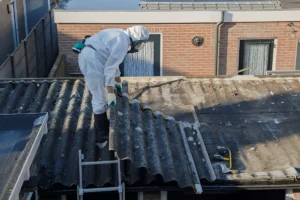
Steps for safe asbestos removal process by professionals
Safe asbestos removal by professionals follows a structured process to minimize fiber release, protect workers, and ensure regulatory compliance, especially with CPCB guidelines in India.
Initial Assessment and Planning
Professionals begin with an asbestos survey to identify and test suspect materials using NABL-accredited labs, confirming ACM presence.
They develop a detailed abatement plan outlining scope, timeline, worker safety protocols, permits, and disposal methods tailored to Indian sites.
Site Preparation and Containment
The work area is sealed with polyethylene sheeting, negative air pressure machines with HEPA filters are set up, and warning signs restrict access.
Non-essential personnel evacuate, and power/water supplies are isolated to prevent contamination spread.
Safe Removal Techniques
Workers in full PPE (respirators, suits, gloves) use wet methods to dampen materials, suppressing dust during careful section-by-section removal without power tools.
Materials are double-bagged in labeled leak-proof containers for secure storage.
Cleanup and Decontamination
HEPA vacuuming, wet wiping, and low-level air monitoring clear residual fibers from surfaces and equipment.
Workers decontaminate PPE via airlocks to avoid cross-contamination.
Disposal and Clearance
Asbestos waste goes to authorized TSDF landfills per Hazardous Waste Rules, with manifests and receipts documented.
Final air clearance testing by certified hygienists confirms safety (<0.1 fibers/cc), followed by inspection reports for reoccupancy.
Key Steps Summary
| Step | Core Actions | Safety Focus |
| Assessment | Survey, lab testing, plan | Identify risks accurately |
| Containment | Seal, negative air, signs | Prevent fiber escape |
| Removal | Wet method, PPE, no power tools | Minimize airborne dust |
| Cleanup | HEPA vac, wet wipe, monitoring | Remove residuals |
| Disposal | Double-bag, TSDF transport | Compliant hazardous waste |
| Clearance | Air tests, final inspection | Verify habitability |
Services like Greenship Services execute this end-to-end for Indian buildings, ensuring CPCB compliance.
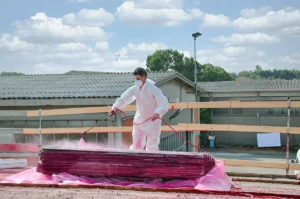
How to hire a reliable asbestos removal service in India?
Hiring a reliable asbestos removal service in India requires careful vetting to ensure safety, compliance with CPCB guidelines, and expertise in handling hazardous materials. Focus on certifications, experience, and local regulations to protect your property and health.
Verify Certifications and Licensing
Check for CPCB compliance, BIS standards (IS 11768 & IS 11769), and international certifications like AHERA, OSHA, or EPA-equivalent training from providers like EPSCO India or Greenship Services.
Prioritize services with NABL-accredited labs for testing and adherence to draft SOPs for safe dismantling and disposal at TSDF facilities.
Assess Experience and Track Record
Select companies with 10+ years in asbestos abatement, especially for maritime, industrial, or building projects in India.
Request client references, project portfolios, and reviews; Greenship Services, for instance, specializes in compliant removal nationwide.
Confirm Insurance and Safety Protocols
Ensure comprehensive liability insurance covers worker injuries, property damage, and environmental contamination.
Verify use of HEPA filters, containment, air monitoring, and post-removal clearance certification to meet occupational limits (0.1 fiber/cc).
Get Multiple Quotes and Compare
Obtain detailed quotes covering survey, removal, disposal, and certification; compare based on scope, not just price.
Avoid low bids that compromise safety—budget for full compliance in high-risk areas like Kolkata.
Check Local Availability and Reviews
Search platforms like Justdial for Kolkata-based services, but cross-verify with online reviews and CPCB listings.
Inquire about emergency protocols and waste disposal adherence to Hazardous Waste Rules.
Key Hiring Checklist
| Criterion | What to Look For | Why It Matters [Source] |
| Criterion | What to Look For | Why It Matters [Source] |
| Certifications | CPCB, AHERA/OSHA, BIS-compliant | Ensures legal safe handling |
| Experience | 10+ years, similar projects | Proven expertise reduces risks |
| Insurance | Full liability coverage | Protects against claims |
| Protocols | HEPA, air testing, TSDF disposal | Prevents fiber release |
| Reviews/Refs | Positive feedback, references | Validates reliability |

FAQ
1. What is Asbestos testing and why is it important before demolition?
Asbestos testing is the process of inspecting and analyzing building materials to check for the presence of asbestos. It is important before demolition or renovation to prevent the release of harmful fibers that can cause serious health problems.
2. Is Asbestos testing legally required in India?
While regulations vary depending on the project type and location, hazardous material management guidelines strongly recommend Asbestos testing before demolition to ensure environmental and worker safety and avoid legal complications.
3. What happens if asbestos is found during testing?
If asbestos is detected, a certified Asbestos Removal Service in India will create a safe removal and disposal plan. The area will be sealed, materials will be carefully removed, and waste will be disposed of according to safety regulations.
4. Can renovation work start without Asbestos testing?
Starting renovation without Asbestos testing is risky, especially in older buildings. Disturbing asbestos-containing materials can release toxic fibers into the air, putting workers and occupants at serious health risk.
5. Who should conduct Asbestos testing?
Only trained professionals or a certified Asbestos Removal Service in India should conduct testing. They follow proper sampling procedures and laboratory analysis to ensure accurate results and safe handling.
Conclusion
Demolition and renovation projects bring exciting transformations—but they also carry hidden risks, especially in older buildings. Ignoring Asbestos testing can result in severe health hazards, legal penalties, and environmental damage.
By partnering with a trusted Asbestos Removal Service in India like Greenship Services, you ensure:
- Worker safety
- Legal compliance
- Environmental protection
- Smooth project execution
- Long-term peace of mind
Before you break a wall or remove a roof, make sure you prioritize safety. Proper Asbestos testing is not just a regulatory requirement—it is a responsibility.
If you are planning demolition or renovation, consult Greenship Services today for professional inspection and safe asbestos removal solutions.