Hello Reader!
Welcome to the blog page of Greenship Services, the Asbestos Removal Service in India.
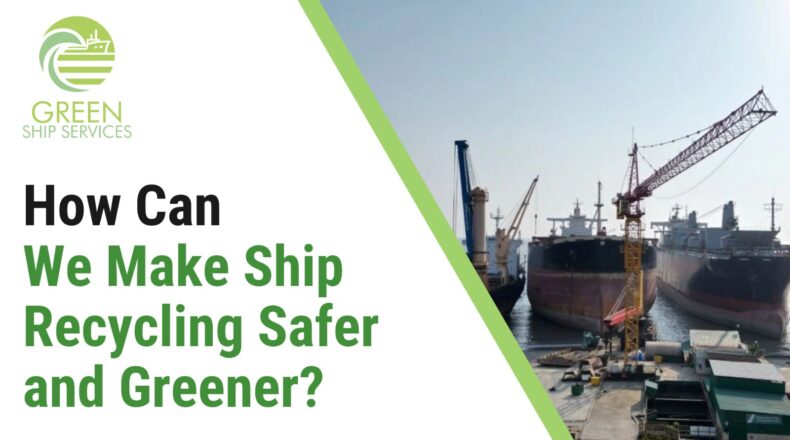
Ship recycling is an important part of the maritime industry’s life cycle. When a vessel reaches the end of its operational life, recycling allows valuable materials such as steel, machinery and other components to be recovered and reused. However, the process must be carefully managed because ships can contain hazardous substances, including asbestos, heavy metals, hydrocarbons and other potentially harmful materials.
A well-managed ship recycling process can support resource recovery while reducing risks to workers and the environment. The International Maritime Organization (IMO) notes that properly conducted ship recycling follows a “cradle to grave” approach, with almost all materials and equipment from a ship potentially being reused or recycled.
So, how can we make ship recycling safer and greener? The answer involves better planning, hazardous-material identification, trained workers, responsible waste management, environmental controls and compliance with international standards.
1. Identify Hazardous Materials Before Recycling
One of the most important steps in safe ship recycling is knowing exactly what hazardous materials are present on a vessel.
Ships may contain asbestos, heavy metals, oils, chemicals, refrigerants and other hazardous substances. The IMO’s Hong Kong Convention requires ships to maintain an Inventory of Hazardous Materials (IHM) that identifies hazardous materials specific to each vessel.
An accurate IHM allows recycling facilities to:
- Identify hazardous materials before dismantling begins
- Plan appropriate removal procedures
- Protect workers from unnecessary exposure
- Separate hazardous and non-hazardous waste
- Arrange appropriate storage and disposal
- Prepare a ship-specific recycling plan
Proper identification is particularly important when dealing with older vessels, where asbestos-containing materials may be present.
2. Give Special Attention to Asbestos
Asbestos is one of the major hazardous materials that can be encountered during ship recycling. It has historically been used in insulation, gaskets, pipes, machinery and other shipboard applications.
Although new installation of asbestos-containing materials on ships has been prohibited under applicable SOLAS requirements since 1 January 2011, older ships can still contain asbestos.
This is why professional Asbestos Removal Service in India can play an important role in making ship recycling safer.
Before disturbing suspected asbestos-containing materials, the appropriate areas should be identified, assessed and managed using suitable procedures. During removal, work areas need to be controlled and workers must receive appropriate training and protection.
The IMO’s safe ship recycling guidelines specifically address asbestos management, including identification, labelling, trained personnel, isolation of work areas and measures to prevent asbestos fibres from becoming airborne.
A qualified Asbestos Removal Service in India can therefore contribute to safer ship recycling by helping with the controlled identification, removal and handling of asbestos-containing materials in accordance with applicable requirements.
3. Prepare a Ship-Specific Recycling Plan
Every vessel is different. Its construction, age, equipment, hazardous materials, and condition can vary significantly.
Therefore, a standard dismantling procedure may not be sufficient for every ship.
A ship-specific recycling plan should determine:
- Which materials need to be removed first
- Where hazardous materials are located
- How workers will access different areas
- What safety precautions are required
- How hazardous waste will be collected
- Where materials will be stored
- How waste will be transported and disposed of
- What emergency procedures are required
The Hong Kong Convention requires ship recycling facilities to prepare a Ship Recycling Plan specific to each vessel, taking into account the ship’s characteristics and hazardous-material inventory.
4. Train Workers and Strengthen Safety Procedures
People working in ship recycling facilities can face numerous occupational hazards, including falls, fires, explosions, sharp materials, confined spaces, heavy machinery and exposure to hazardous substances.
Worker training should therefore be a fundamental part of ship recycling.
Training can cover:
- Safe dismantling procedures
- Personal protective equipment
- Hazardous-material identification
- Asbestos awareness
- Emergency response
- Fire prevention
- Confined-space safety
- Waste segregation
- Safe handling of chemicals
- Incident reporting
For asbestos-related work, personnel involved in removal should receive appropriate training and authorization according to applicable national requirements. IMO guidance also emphasizes limiting exposure and isolating asbestos-removal areas.

5. Use Proper Asbestos Removal Techniques
Simply identifying asbestos is not enough. It must be removed and handled carefully.
A professional Asbestos Removal Service in India can help ensure that asbestos-containing materials are dealt with through controlled procedures rather than being broken, cut or disturbed unnecessarily.
Depending on the material and circumstances, asbestos-removal work may involve:
- Identifying and assessing the material
- Isolating the work area
- Restricting access to authorized personnel
- Using appropriate protective equipment
- Applying suitable containment and dust-control measures
- Carefully removing asbestos-containing materials
- Packaging and labelling waste appropriately
- Transporting and disposing of asbestos waste through authorized channels
- Maintaining appropriate records
The objective is to prevent asbestos fibres from becoming airborne and reduce the possibility of exposure to workers and surrounding areas.
6. Improve Waste Segregation and Management
Greener ship recycling depends heavily on what happens to materials after they are removed from the vessel.
Materials should be segregated according to their characteristics and intended destination. Reusable and recyclable materials should be separated from hazardous waste rather than being mixed together.
A responsible system can include separate handling of:
- Steel
- Non-ferrous metals
- Electrical equipment
- Machinery
- Plastics
- Oils and hydrocarbons
- Asbestos-containing materials
- Chemical residues
- Other hazardous substances
The IMO’s ship recycling guidance emphasizes tracking hazardous materials and wastes from the recycling facility to their ultimate destination and ensuring that final waste-management facilities meet applicable requirements.
7. Reduce Air, Soil and Water Pollution
A greener recycling facility should focus not only on recovering materials but also on preventing pollution.
Activities should be planned to reduce:
- Airborne dust
- Oil and chemical spills
- Contamination of soil
- Contamination of nearby water
- Uncontrolled waste disposal
- Improper burning of materials
Environmental monitoring, spill-response procedures, proper storage areas and appropriate waste-management systems can help reduce these risks.
This is especially important because ship recycling involves large quantities of materials and can generate different types of hazardous and non-hazardous waste.
8. Maximize Material Recovery
One of the key environmental benefits of ship recycling is the recovery and reuse of valuable materials.
Steel is particularly important because ships contain substantial quantities of it. According to the IMO, recycled steel requires about one-third of the energy needed to produce steel from raw materials.
Responsible material recovery can therefore:
- Reduce demand for virgin raw materials
- Save energy
- Reduce waste
- Support circular-economy principles
- Create economic value from end-of-life vessels
However, material recovery should never come at the expense of worker safety or environmental protection.

9. Adopt Better Environmental Infrastructure
Ship recycling facilities need appropriate infrastructure to safely manage dismantling activities and hazardous materials.
This can include:
- Dedicated hazardous-material storage areas
- Controlled asbestos-removal zones
- Appropriate drainage systems
- Spill-control equipment
- Fire-protection systems
- Waste-storage facilities
- Safe material-handling equipment
- Emergency response arrangements
- Suitable personal protective equipment
Investment in infrastructure can help recycling yards move from informal dismantling practices toward more controlled and environmentally responsible operations.
10. Follow International Standards and Regulations
International regulation plays an important role in improving the consistency of ship recycling practices around the world.
The Hong Kong International Convention for the Safe and Environmentally Sound Recycling of Ships entered into force on 26 June 2025. It establishes requirements relating to ship design and preparation, hazardous-material inventories, recycling facilities, recycling plans, surveys, certification and enforcement.
The Convention is designed to ensure that ships reaching the end of their operational lives can be recycled without creating unnecessary risks to human health, safety or the environment.
For businesses involved in ship recycling, understanding applicable international and national requirements is essential.
11. Work With Qualified Hazardous-Material Specialists
Ship recycling involves many different technical challenges. Hazardous materials should be handled by suitably trained and qualified professionals rather than treated as ordinary waste.
For asbestos-containing materials in particular, working with a professional Asbestos Removal Service in India can help recycling facilities plan and execute controlled removal procedures.
Specialist support may be valuable for:
- Asbestos identification and assessment
- Removal planning
- Work-area containment
- Worker protection
- Hazardous-material handling
- Waste packaging and management
- Documentation and compliance support
The exact requirements depend on the vessel, materials involved, applicable regulations and site conditions.
12. Build a Stronger Safety Culture
Technology and regulations are important, but a genuinely safer ship recycling industry also requires a strong safety culture.
Workers should be encouraged to report unsafe conditions, supervisors should actively monitor work areas, and safety procedures should be reviewed regularly.
A strong safety culture means that production targets should not override appropriate precautions when workers are dealing with hazardous materials.
13. Move Toward a Circular Maritime Economy
The future of ship recycling is closely connected to the circular economy.
Instead of viewing an old vessel simply as waste, recycling can recover materials and equipment that can return to productive use. This reduces the need for new raw materials and can lower the environmental impact associated with manufacturing.
However, circularity must include the safe management of hazardous materials. Recycling more materials is beneficial only when the process protects workers and prevents pollution.
Also Read: Promoting Responsible Ship Recycling

Why Professional Asbestos Removal Is Essential During Ship Recycling
Asbestos can be present in insulation, gaskets, pipes, machinery and other components of older vessels. During ship recycling, disturbing these materials without proper precautions can release harmful asbestos fibres into the air. Professional asbestos removal is therefore an important part of protecting workers and maintaining a safer recycling environment.
Preventing Fibre Release
Professional removal procedures are designed to minimize the release of asbestos fibres during dismantling. Proper isolation, containment and controlled removal techniques can help prevent fibres from spreading to surrounding areas.
Protecting Workers
Ship recycling workers may come into contact with asbestos-containing materials while cutting, dismantling or removing ship components. Trained professionals use appropriate protective measures and work practices to reduce the risk of occupational exposure.
Controlled Removal and Containment
Asbestos-containing materials should be carefully identified and removed using controlled procedures. Work areas can be isolated and suitable containment measures used to prevent contamination beyond the removal area.
Proper Packaging and Disposal
After removal, asbestos waste needs to be securely packaged, labelled, transported and disposed of through appropriate waste-management channels. Proper handling helps prevent further exposure and environmental contamination.
For safer ship recycling, partnering with a qualified Asbestos Removal Service in India can help ensure asbestos-containing materials are managed responsibly from identification and removal through to final disposal.
Conclusion
Making ship recycling safer and greener requires a complete approach—from identifying hazardous materials before dismantling to safely removing asbestos, protecting workers, managing waste, and maximizing material recovery.
Particular attention should be given to asbestos because older ships may contain asbestos-containing materials. A professional Asbestos Removal Service in India can support safer recycling operations by helping ensure that asbestos-related work is properly planned, controlled and managed.
With accurate hazardous-material inventories, trained workers, ship-specific recycling plans, responsible waste management, appropriate environmental infrastructure and compliance with international requirements, the ship recycling industry can move toward a safer and more sustainable future.
Greenship Services – Asbestos Removal Service in India can help organizations address asbestos-related risks as part of responsible ship recycling and hazardous-material management.