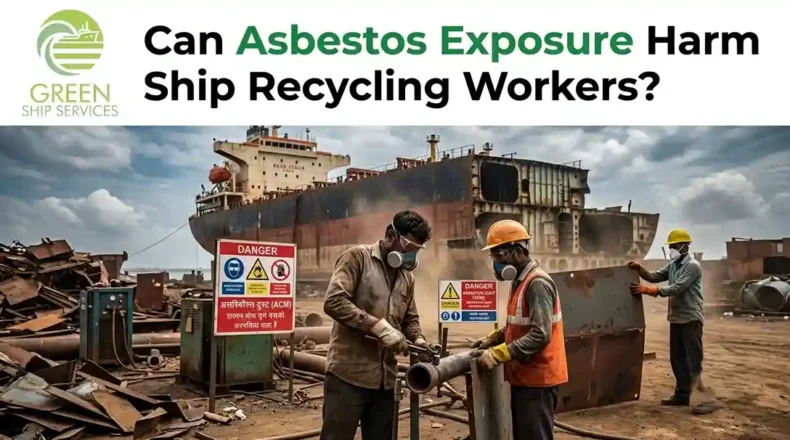
Asbestos can remain hidden in insulation, machinery components, panels, and other ship materials. During dismantling, cutting or removal, disturbed asbestos-containing materials can create serious occupational hazards. So, can asbestos exposure harm ship recycling workers? Safe ship recycling requires identification, controlled removal, worker protection, proper documentation, and compliant disposal. Understanding asbestos management helps recycling facilities protect workers while supporting environmentally responsible vessel recycling.However, asbestos exposure can create serious occupational risks for ship recycling workers.
Additionally, workers need appropriate protective equipment when handling suspected asbestos materials.
Meanwhile, trained professionals can assess potential asbestos hazards more systematically. Meanwhile, trained professionals can assess potential asbestos hazards more systematically.Consequently, early identification can help reduce unnecessary exposure during ship dismantling.
Can an Asbestos Removal Service Protect Ship Recycling Workers?
An Asbestos Removal Service can form an important part of safe ship recycling when asbestos-containing materials are identified, assessed, removed, packaged, and managed by appropriately trained personnel. For shipowners and recycling facilities, integrating asbestos control with an Inventory of Hazardous Materials (IHM), worker training, protective measures, and documented procedures can support safer recycling operations and regulatory compliance.
Can Asbestos Exposure Harm Ship Recycling Workers?
Can asbestos exposure harm ship recycling workers?
Yes. Disturbing asbestos-containing materials can release airborne fibres, creating an occupational exposure hazard. Ships built before the complete prohibition of new asbestos installations may contain asbestos-containing materials, which is why identification and controlled management are important during recycling. IMO guidance specifically recognises asbestos as a hazardous material requiring careful management during ship recycling.
Know Ship recycling Service Process
For a recycling facility, asbestos management should therefore begin before cutting and dismantling activities. The objective is to identify potential asbestos-containing materials, determine their location and condition, control exposure risks, and ensure removal and disposal are undertaken through appropriate procedures.
Why Is Asbestos a Concern During Ship Recycling?
Ship recycling involves dismantling vessels that may contain hazardous materials accumulated throughout their operational life. Asbestos may historically have been used in applications such as:
- Thermal insulation
- Pipe insulation
- Gaskets and packing
- Fire-resistant materials
- Machinery components
- Electrical or engineering applications
- Wall, ceiling, or panel materials
Know Asbestos removal Process
The exact presence and location of asbestos cannot safely be assumed from a vessel’s age or appearance alone.
The IMO states that ships being recycled can contain environmentally hazardous substances including asbestos, heavy metals, hydrocarbons and ozone-depleting substances.Therefore, identifying asbestos-containing materials should remain a key safety priority.
Why Can Ship Dismantling Disturb Asbestos?
Activities such as cutting, breaking, drilling, grinding, removing insulation, or dismantling components can disturb asbestos-containing materials.
Therefore, an asbestos-management programme should be incorporated into the vessel-specific recycling plan rather than treated as an isolated activity.
How Does an Asbestos Removal Service Support Ship Recycling?
A professional asbestos removal service for ship recycling can support the controlled management of asbestos-containing materials from identification through removal and disposal.
A structured process may include:
- Document review
- IHM review
- Visual inspection
- Sampling where required
- Risk assessment
- Work-area preparation
- Controlled removal
- Worker protection
- Packaging and labelling
- Safe transportation and disposal
- Documentation and records
- Post-removal verification where applicable
The exact scope should be determined by qualified professionals and applicable requirements.
What Is an Inventory of Hazardous Materials?
An Inventory of Hazardous Materials (IHM) provides ship-specific information about hazardous materials present onboard.
Under the Hong Kong Convention, ships must have an IHM that is prepared, verified, and kept up to date. The IMO’s 2023 IHM guidelines explain that the inventory is intended to provide ship-specific information about hazardous materials to help protect health and safety and prevent environmental pollution at ship recycling facilities.
This makes IHM management an important component of modern ship recycling compliance. For this reason, proper asbestos surveys should be completed before recycling activities begin.
Why Is IHM Maintenance in India Important?
IHM Maintenance in India helps ensure that hazardous-material information remains appropriately documented and updated throughout a vessel’s lifecycle.
For shipowners and managers, good IHM practices can support:
- Hazard identification
- Recycling preparation
- Contractor planning
- Worker safety
- Compliance documentation
- Ship Recycling Plan development
- Hazardous-material tracking
The IHM should be treated as a living compliance document rather than simply a document prepared when a ship approaches recycling.
How Does Asbestos Inspection Help Before Ship Recycling?
An asbestos inspection can help identify materials that may require further assessment before dismantling begins.
A typical inspection strategy may consider:
- Existing IHM information
- Ship construction date
- Previous repairs and modifications
- Machinery spaces
- Pipe systems
- Insulation
- Accommodation areas
- Engine-room components
- Gaskets and seals
- Fire-protection materials
- Other suspected asbestos-containing materials
Where asbestos is suspected, suitable sampling and analysis should be performed by competent professionals following applicable procedures.
Why Request Asbestos Inspection for Ship Recycling?
Shipowners or recycling facilities may request asbestos inspection for ship recycling when existing documentation does not provide sufficient information about asbestos-containing materials.
An inspection can help answer important planning questions:
- Where is asbestos located?
- What materials require controlled removal?
- Which work areas require additional controls?
- What activities could disturb asbestos?
- What protective measures are required?
- What documentation should be maintained?
Early identification can also help integrate asbestos work into the vessel-specific Ship Recycling Plan.
What Are the Main Steps in Safe Asbestos Removal?
| Stage | Main Purpose |
| Document review | Understand existing hazardous-material information |
| Inspection | Identify suspected asbestos-containing materials |
| Sampling | Confirm material composition where required |
| Risk assessment | Determine appropriate control measures |
| Work planning | Establish removal methods and responsibilities |
| Area preparation | Control access and potential fibre spread |
| Controlled removal | Remove materials using appropriate procedures |
| PPE | Protect personnel undertaking hazardous work |
| Packaging | Prevent release during handling and transport |
| Disposal | Manage asbestos waste through approved routes |
| Documentation | Maintain traceability and compliance records |
| Verification | Confirm completion according to applicable procedures |
India’s Recycling of Ships Regulations, 2026 specifically provide requirements relating to asbestos removal, including wet removal practices, appropriate PPE, specialised trained workers, leak-proof packaging, secured disposal, and specialised contractors for asbestos removal.
What Safety Measures Are Important for Ship Recycling Workers?
Worker protection should be incorporated into the entire asbestos-removal process.
Important measures can include:
Appropriate Personal Protective Equipment
Workers involved in asbestos handling should receive suitable PPE and respiratory protection based on the applicable risk assessment and regulatory requirements.
India’s 2026 regulations specifically require PPE such as masks or respirators for workers involved in asbestos removal or handling.
Worker Training
Only appropriately trained personnel should undertake activities involving asbestos.
Training should address:
- Asbestos hazards
- Identification of suspected materials
- Safe work procedures
- PPE use
- Decontamination
- Emergency procedures
- Waste handling
- Exposure-control practices
Controlled Work Areas
The work area should be controlled to minimise unnecessary exposure and prevent contamination of surrounding areas.
Wet Removal
India’s 2026 regulations specify that removal of asbestos dust and fibres and handling should be conducted in wet conditions.
Proper Packaging
Removed asbestos and asbestos-containing material should be appropriately packaged to prevent fibre release during handling and disposal. India’s 2026 regulations specify leak-proof packaging and secured disposal arrangements.
What Role Does Ship Recycling Hazardous Material Management Play?
Ship recycling hazardous material management services extend beyond asbestos.
A comprehensive programme may address:
- Asbestos
- PCB-containing materials
- Heavy metals
- Ozone-depleting substances
- Hazardous liquids
- Contaminated residues
- Hazardous paints and coatings
- Other materials identified through the IHM
The IMO’s Hong Kong Convention establishes requirements for safe and environmentally sound ship recycling, including hazardous-material inventories and ship-specific recycling plans.
This means asbestos control should ideally be integrated into the broader hazardous-material management system.
How Does the Hong Kong Convention Address Asbestos?
The Hong Kong Convention entered into force on 26 June 2025. It establishes mandatory international requirements intended to ensure that ships are recycled without unnecessary risks to human health, safety, and the environment.
The Convention addresses hazardous materials including asbestos and requires:
- Ship-specific Inventory of Hazardous Materials
- Surveys and certification
- Authorized ship recycling facilities
- Ship Recycling Plans
- Safe working practices
- Worker safety and training
- Environmental protection
- Reporting and record keeping
The IMO also identifies asbestos among materials that may present risks during ship recycling.
How Can a Ship Recycling Service in India Improve Hazardous Material Control?
A professional Ship Recycling Service in India can coordinate several compliance activities instead of treating each hazardous material independently.
A comprehensive service framework may include:
IHM preparation → IHM maintenance → hazardous-material inspection → asbestos assessment → removal planning → recycling documentation → contractor coordination → waste management
This integrated approach can help connect technical inspection with actual recycling operations.
For facilities and shipowners, the objective is to ensure that hazardous materials identified in the IHM are considered when developing the vessel-specific recycling strategy.
Why Combine Asbestos Removal With IHM Maintenance?
Asbestos information is most useful when it is properly connected with the vessel’s overall hazardous-material records.
Combining IHM Maintenance in India with asbestos management can help:
- Keep hazardous-material information organised
- Track changes and modifications
- Support future inspections
- Improve recycling preparation
- Facilitate contractor planning
- Strengthen documentation
- Reduce uncertainty before dismantling
The IMO’s IHM guidelines specifically emphasise ship-specific information about hazardous materials to support health, safety, and environmental protection at recycling facilities. Check client’s Reviews click: https://shorturl.at/dfOX8
What Should Shipowners Check Before Asbestos Removal?
Before starting asbestos-related work, shipowners and recycling stakeholders should consider:
- Is the IHM available and current?
- Has asbestos been adequately identified?
- Are suspected materials documented?
- Has an appropriate inspection been completed?
- Are qualified personnel involved?
- Is a risk assessment available?
- Are workers properly trained?
- Is suitable PPE provided?
- Are removal procedures documented?
- Is waste disposal appropriately planned?
- Are required records maintained?
- Is the work incorporated into the Ship Recycling Plan?
This preparation can reduce uncertainty and support safer project execution.
How Can Greenship Services Support Asbestos Management?
For Greenship Services, led by Arjun Bannerjee, asbestos management can be positioned within a broader ship-recycling compliance framework.
Potential service areas include:
- Asbestos inspection coordination
- Asbestos-containing material identification
- IHM-related support
- IHM maintenance
- Hazardous-material documentation
- Ship recycling compliance support
- Asbestos removal planning
- Contractor coordination
- Hazardous-material management
- Recycling documentation
- Environmental compliance support
The precise scope of work should be determined according to the vessel, applicable regulations, IHM findings, and site-specific requirements.
Asbestos Exposure and Ship Recycling: Key Takeaways
For a featured snippet, the core points are:
- Asbestos may be present in older vessels and legacy ship components.
- Disturbing asbestos-containing materials can create occupational exposure risks.
- An IHM provides ship-specific hazardous-material information.
- Asbestos inspection should precede work where asbestos presence is uncertain.
- Removal should be performed by appropriately trained and qualified personnel.
- Suitable PPE and exposure-control measures are essential.
- India’s 2026 regulations specify wet asbestos removal, PPE, trained workers, leak-proof packaging and controlled disposal requirements.
- Asbestos management should be integrated with the broader Ship Recycling Plan and hazardous-material management system.
Conclusion
Asbestos management is an important part of safe and responsible ship recycling. Proper inspection, IHM maintenance, controlled removal, trained workers, PPE, appropriate packaging, and compliant disposal can help reduce occupational and environmental risks. For shipowners and recycling facilities, integrating an Asbestos Removal Service with broader hazardous-material management and Ship Recycling Services can support safer operations and stronger compliance throughout the vessel-recycling process. Check our map link click: https://maps.app.goo.gl/gt555sYG4PUsuQ268
Frequently Asked Questions About Asbestos Removal in Ship Recycling
Can asbestos exposure harm ship recycling workers?
Yes. Disturbing asbestos-containing materials can release airborne fibres and create an occupational health hazard. Proper identification, controlled removal, worker protection, and disposal are therefore important.
Why is an Asbestos Removal Service important for ship recycling?
An Asbestos Removal Service can help identify, plan, control, remove, package, and manage asbestos-containing materials according to applicable requirements and site-specific procedures.
Can older ships contain asbestos?
Yes. IMO notes that ships built before 1 July 2002 may contain asbestos, subject to the applicable SOLAS provisions and subsequent requirements. New installation of asbestos-containing materials was prohibited more broadly from 1 January 2011.
What is IHM Maintenance in India?
IHM Maintenance in India refers to keeping a ship’s Inventory of Hazardous Materials appropriately updated as relevant information changes during the vessel’s operational life.
Why is asbestos inspection necessary before ship recycling?
Inspection can help identify suspected asbestos-containing materials and inform appropriate work planning before dismantling activities disturb those materials.
What does asbestos removal for ship recycling involve?
It can involve document review, inspection, sampling where required, risk assessment, controlled removal, worker protection, packaging, transportation, disposal, and record keeping.
Who should remove asbestos from ships?
Asbestos removal should be undertaken by appropriately trained and qualified personnel or specialised contractors in accordance with applicable regulations and site-specific requirements. India’s 2026 regulations specify specialised contractors and trained workers for relevant asbestos activities.
What is the role of an Inventory of Hazardous Materials?
An IHM provides ship-specific information about hazardous materials and supports safe and environmentally sound ship recycling planning.
How can I request asbestos inspection for ship recycling?
You can request asbestos inspection for ship recycling from a qualified service provider that can assess the vessel, review existing hazardous-material information, coordinate appropriate inspection or sampling, and document findings.
Does ship recycling only require asbestos management?
No. Ship recycling can involve multiple hazardous materials, including asbestos, PCBs, heavy metals, hydrocarbons and ozone-depleting substances. The IHM and Ship Recycling Plan help address the vessel’s broader hazardous-material profile.