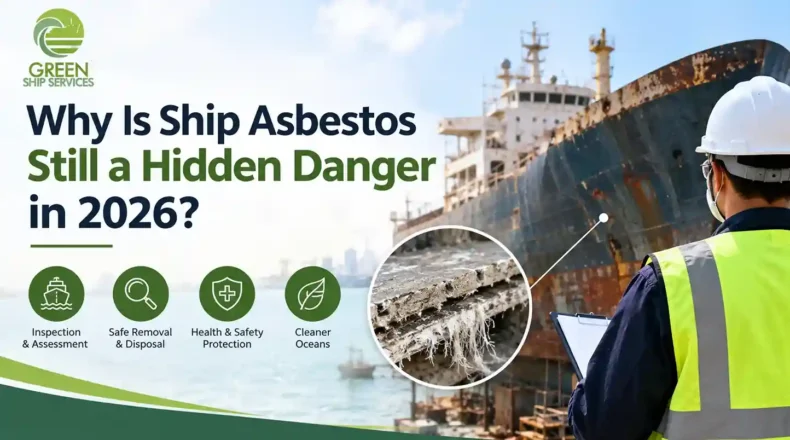
Asbestos remains a serious concern in older ships because it can threaten worker safety and complicate ship recycling. Although many countries restrict its use, hazardous materials may still exist in aging vessels. Therefore, accurate inspections, proper documentation, and safe removal procedures matter. In India, shipowners and recycling stakeholders need clear compliance guidance to manage asbestos risks responsibly throughout the recycling process.
How Can an Asbestos Removal Service in India Improve Ship Safety?
Why does asbestos remain a problem on ships in 2026? Older vessels may contain asbestos in insulation, gaskets, fireproofing, and other components. When workers disturb these materials, dangerous fibres can become airborne. Therefore, an Asbestos Removal Service in India can support risk assessment, safe handling, and compliance planning for shipowners and recycling facilities.
Why Does Asbestos Remain a Problem on Ships in 2026?
Asbestos once served widely as a heat-resistant and fire-resistant material in shipbuilding. However, its fibres can cause serious diseases, including asbestosis, lung cancer, and mesothelioma, when people inhale them.
Despite restrictions on its use, asbestos may remain in older vessels. Furthermore, repairs, equipment replacement, and incomplete historical records can make hazardous materials difficult to identify.
In 2026, shipowners and recycling facilities must therefore pay close attention to inspection, documentation, worker protection, and applicable national and international requirements. Early identification helps teams plan safer maintenance, dismantling, and recycling activities.
What Is an Inventory of Hazardous Materials for Ships?
An Inventory of Hazardous Materials (IHM) is a ship-specific document that identifies hazardous materials present in a vessel’s structure, equipment, and relevant stores. It supports safer ship operation, maintenance, and recycling.
For ships covered by applicable regulations, the IHM generally includes information about hazardous materials such as asbestos, polychlorinated biphenyls (PCBs), ozone-depleting substances, and certain heavy metals.
Why Is an IHM Important for Ship Recycling?
An accurate IHM Maintenance Services helps shipowners, inspectors, and recycling facilities understand potential hazards before dismantling begins.
It can help teams:
- Identify materials that require specialist handling.
- Plan appropriate protective measures for workers.
- Support the preparation of a ship-specific recycling plan.
- Improve communication between shipowners, surveyors, and recycling facilities.
- Maintain relevant records for regulatory review.
However, an IHM does not replace a physical inspection where one is required. Teams must also verify the inventory, assess inaccessible areas, and update documentation when necessary.
How Can Ship Inspection Services Identify Asbestos?
Professional ship inspections help identify suspected asbestos-containing materials and assess their condition. The precise inspection approach depends on the vessel’s age, construction, records, and intended use.
- Review Existing Ship Documents
First, inspectors review available construction records, equipment specifications, maintenance histories, and previous hazardous-material reports. These documents can help identify areas that may contain asbestos.
However, incomplete records cannot establish that a ship is asbestos-free. Therefore, inspectors may need to examine additional locations.
- Conduct a Visual Inspection
Next, qualified personnel examine accessible areas where asbestos-containing materials may occur. These can include engine rooms, pipe insulation, bulkheads, gaskets, and older fire-resistant components.
Importantly, workers should not cut, scrape, or break suspected materials during a routine inspection. Disturbance can release hazardous fibres.
- Arrange Sampling and Laboratory Analysis
When necessary, trained personnel collect samples using suitable controls and procedures. A competent laboratory then analyses the samples to determine whether they contain asbestos.
Sampling must minimise exposure and prevent cross-contamination. In addition, inspectors should document sample locations and results carefully.
- Record Findings and Recommend Controls
Finally, the inspection team records identified or suspected materials, their locations, and relevant condition details. The findings can inform the IHM, risk assessments, and subsequent removal or management plans.
As a result, shipowners can make better-informed decisions before repairs or recycling activities begin.
What Are the Key Asbestos Compliance Requirements for Ship Recycling in India?
India’s ship recycling sector operates under national legislation and applicable international maritime requirements. The Recycling of Ships Act, 2019 provides a legal framework for ship recycling in India. In addition, the Hong Kong International Convention for the Safe and Environmentally Sound Recycling of Ships entered into force on 26 June 2025.
Requirements depend on the vessel, its flag, the recycling facility, and the applicable legal framework. Therefore, stakeholders should confirm their obligations with qualified professionals and the relevant authorities.
Key compliance considerations include:
- IHM documentation: Maintain the appropriate hazardous-material inventory and supporting records.
- Asbestos risk assessment: Identify materials that could expose workers during dismantling.
- Safe removal planning: Establish suitable controls before disturbing asbestos-containing materials.
- Worker protection: Provide appropriate training, protective equipment, and exposure controls.
- Waste management: Package, transport, and dispose of asbestos waste according to applicable requirements.
- Documentation and verification: Keep inspection reports, analytical results, and relevant compliance records.
Moreover, an inspection report alone does not guarantee regulatory compliance. The shipowner and recycling facility must address the findings and fulfil their respective obligations.
How Can an Asbestos Removal Service in India Reduce Ship Recycling Risks?
Professional asbestos management begins before dismantling. Rather than removing materials immediately, qualified teams assess the hazard, establish controls, and determine the appropriate handling method.
A structured process may include:
- Identifying and assessing suspected asbestos-containing materials.
- Reviewing inspection findings and IHM documentation.
- Planning controlled removal or another suitable management approach.
- Restricting access to affected areas where necessary.
- Using trained personnel and appropriate protective equipment.
- Managing asbestos waste safely under applicable rules.
- Maintaining records and conducting suitable post-work checks.
However, not every asbestos-containing material requires immediate removal. Depending on its condition and the planned work, controlled management may be appropriate. A competent professional should determine the safest approach for each situation.
When Should You Request an IHM Survey for Ship Recycling?
Shipowners should consider an IHM survey early in the vessel’s planning process, especially before a planned sale for recycling or entry into a recycling facility.
Early planning gives the relevant teams more time to review records, inspect accessible areas, arrange laboratory analysis, and address missing information. Consequently, it can reduce avoidable delays and improve preparation.
When you request an IHM survey for ship recycling, clarify the vessel’s particulars, intended recycling destination, available documentation, and required survey scope. Also, confirm the surveyor’s qualifications and whether the proposed inspection meets the relevant regulatory requirements.
How Can Greenship Services Support Asbestos Compliance Planning?
Greenship Services, led by Arjun Bannerjee, operates in the ship recycling sector. For stakeholders planning vessel recycling in India, discussing hazardous-material identification and compliance requirements can help clarify the next steps.
Ship Recycling Asbestos Compliance Consultancy in India
A suitable consultancy engagement may involve reviewing available documentation, identifying information gaps, coordinating inspection requirements, and helping stakeholders understand the steps needed to address asbestos-related risks.
Before engaging a provider, shipowners should confirm the precise services offered, the qualifications of the personnel involved, and whether specialist inspection, laboratory testing, or asbestos removal requires separate accredited providers.
Greenship Services can be approached to discuss project-specific needs and determine which services it can provide. Stakeholders should verify the scope directly rather than assume that every inspection, testing, and removal activity falls under one service.
How Can You Book an Asbestos Inspection for a Ship in India?
To book an asbestos inspection for a ship in India, prepare the vessel’s identification details, construction year, location, available IHM records, and intended recycling schedule.
Then, ask the service provider about:
- The inspection scope and applicable standards.
- Surveyor qualifications and laboratory arrangements.
- Access requirements and safety precautions.
- Report format and expected delivery timeline.
- Any additional testing, removal, or consultancy charges.
Finally, review the findings and address identified hazards before undertaking work that could disturb asbestos-containing materials. Check client Reviews click: https://shorturl.at/BZHQ8
Conclusion
Asbestos remains a significant ship recycling concern in 2026, particularly when older materials and incomplete records complicate inspections. Accurate IHM documentation, competent surveys, and safe handling procedures help reduce exposure risks. For shipowners and recycling stakeholders in India, Greenship Services, led by Arjun Bannerjee, can be a starting point for discussing project requirements and clarifying the appropriate compliance steps before recycling begins. Click the map: https://maps.app.goo.gl/Y8m5H53XmBJ8T6XR8
Why Is Ship Asbestos Still a Hidden Danger in 2026?
Featured Snippet: Why Is Ship Asbestos Still Dangerous in 2026?
Ship asbestos remains a hidden danger in 2026 because older vessels may still contain asbestos in insulation, pipe coverings, gaskets, and other components. When these materials are disturbed during maintenance, repairs, or ship recycling, microscopic fibres can become airborne and pose serious health risks. Proper asbestos inspections, safe handling procedures, and compliant removal practices help protect workers and the marine environment.
Frequently Asked Questions
- Why is asbestos still found on ships in 2026?
Asbestos may remain in older ships built before restrictions on new installations took effect. It can persist in insulation, fireproofing, gaskets, and other components unless identified and safely managed or removed.
- Where is asbestos commonly found on ships?
Asbestos may be present in engine-room insulation, pipe lagging, bulkhead panels, fire-resistant materials, gaskets, seals, and electrical components. Its presence depends on the vessel’s age, construction, and maintenance history.
- What are the health risks of asbestos exposure for ship workers?
Breathing airborne asbestos fibres can cause serious diseases, including asbestosis, lung cancer, and mesothelioma. These conditions may develop decades after exposure, making prevention and proper handling essential.
- How can shipowners identify asbestos on a vessel?
Shipowners can arrange an inspection by a qualified asbestos specialist. The process may include reviewing vessel records, inspecting suspect materials, collecting samples where appropriate, and testing them through a competent laboratory.
- How can asbestos be managed safely during ship recycling?
Ship recycling facilities should identify asbestos-containing materials before dismantling, assess exposure risks, and use trained personnel with appropriate protective equipment and controlled removal procedures. Asbestos waste must be contained, labelled, transported, and disposed of in accordance with applicable regulations.