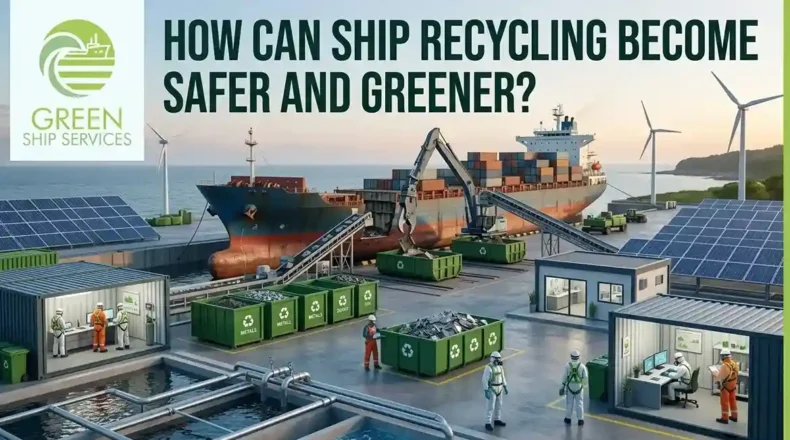
Ship recycling can become safer and greener when hazardous materials are identified before dismantling, workers receive appropriate protection, waste is handled responsibly, and environmental controls are maintained throughout the process. Strong documentation, regulatory compliance, safe dismantling practices, and responsible waste management can reduce occupational and environmental risks while supporting more sustainable ship recycling operations across India and internationally.
How Can Ship Recycling Be Made Safer and More Environmentally Friendly?
How can ship recycling be made safer and more environmentally friendly? By combining systematic hazardous-material identification, trained workers, controlled dismantling, pollution prevention, responsible waste disposal, and documented compliance. A professional Ship Recycling Service in India can help shipowners and recycling stakeholders establish processes that address safety, environmental protection, hazardous materials, and regulatory requirements throughout the recycling lifecycle.
What Makes Ship Recycling Safe and Sustainable?
Responsible ship recycling requires more than dismantling an obsolete vessel. It involves controlling occupational hazards and environmental impacts from the planning stage through final waste handling.
Key elements include:
- Hazardous-material identification
- Pre-recycling inspections
- Inventory of Hazardous Materials (IHM)
- Worker training
- Appropriate personal protective equipment
- Safe dismantling procedures
- Controlled waste segregation
- Pollution prevention
- Emergency preparedness
- Accurate documentation and traceability
- Regulatory compliance monitoring
These measures create a stronger foundation for safer recycling operations. Get connect with us click: https://greenshipservices.in/contact-us/
Why Is Hazardous Material Management Important in Ship Recycling?
Ships can contain materials that require careful identification, removal, storage, and disposal. Examples may include asbestos-containing materials, certain oils, chemicals, paints, contaminated residues, refrigerants, and other hazardous substances.
Poor handling can expose workers and surrounding environments to unnecessary risks.
Professional ship recycling hazardous material management services can support the identification and controlled management of hazardous substances before and during dismantling.
What Should Hazardous Material Management Include?
- Identification – Determine where hazardous materials may be present.
- Documentation – Maintain appropriate records and inventories.
- Risk assessment – Evaluate potential worker and environmental exposure.
- Controlled removal – Use appropriate procedures for hazardous materials.
- Segregation – Keep hazardous and non-hazardous waste appropriately separated.
- Storage – Prevent leaks, spills, contamination, and unauthorized access.
- Transportation – Follow applicable requirements for moving hazardous waste.
- Disposal or treatment – Use appropriate authorized channels.
This approach supports both worker safety and environmental protection.
How Does Asbestos Removal Improve Ship Recycling Safety?
Asbestos is a particularly important concern because older vessels may contain asbestos-containing materials in insulation, piping, equipment, or other areas.
Improper disturbance can release hazardous fibres into the working environment.
A professional Asbestos Removal Service in India should therefore use appropriate assessment, containment, removal, worker-protection, and waste-management procedures consistent with applicable requirements.
Important Asbestos-Control Measures
- Identify suspected asbestos-containing materials before disturbance.
- Restrict unnecessary access to affected areas.
- Use suitable containment and control measures.
- Provide appropriate worker protection.
- Prevent fibre migration.
- Package and label asbestos waste appropriately.
- Maintain removal and disposal records.
- Use qualified personnel and appropriate procedures.
Asbestos should never be treated like ordinary shipboard waste.
What Is the Role of an Inventory of Hazardous Materials?
An Inventory of Hazardous Materials (IHM) provides important information about hazardous materials present on a ship.
An accurate IHM can help stakeholders understand:
- What hazardous materials may be present
- Where they are located
- Which materials require controlled handling
- What precautions may be necessary
- How materials should be managed during recycling
Maintaining reliable IHM information supports safer planning before dismantling begins.
It also improves communication between shipowners, surveyors, recycling facilities, contractors, and workers.
How Can Ship Recycling Environmental Compliance Be Improved?
Effective compliance should be treated as an ongoing process rather than a final paperwork exercise.
Strong ship recycling environmental compliance guidelines should address the entire recycling operation, including:
- Pre-recycling planning
- Hazard identification
- Waste management
- Pollution prevention
- Worker safety
- Emergency procedures
- Documentation
- Monitoring
- Legal and regulatory requirements
- Final disposal or recovery routes
Compliance Checklist for Safer Ship Recycling
| Area | Recommended Focus |
| Hazardous materials | Identify, document, remove, and manage safely |
| IHM | Maintain accurate hazardous-material information |
| Worker safety | Training, PPE, risk controls, and supervision |
| Asbestos | Controlled identification, removal, and disposal |
| Waste | Segregation, storage, traceability, and authorized handling |
| Pollution control | Prevent soil, water, and air contamination |
| Documentation | Maintain inspection, removal, waste, and compliance records |
| Emergency response | Prepare for spills, fires, exposure, and other incidents |
| Environmental protection | Monitor and control recycling impacts |
This checklist can serve as a useful starting point, but individual projects require requirements-based assessment.
Can Better Waste Segregation Make Ship Recycling Greener?
Yes. Waste segregation is an important part of environmentally responsible recycling.
When different waste streams are mixed together, recovery becomes more difficult and contamination risks can increase.
A controlled segregation system can separate materials such as:
- Ferrous metals
- Non-ferrous metals
- Recyclable materials
- Hazardous waste
- Oil-contaminated materials
- Asbestos-containing waste
- Electrical and electronic components
- Other regulated waste streams
Proper identification and segregation can improve recovery opportunities while reducing unnecessary environmental risks.
How Can Worker Safety Be Improved During Ship Recycling?
Worker safety should be integrated into every stage of ship recycling.
Shipbreaking can involve hazards such as:
- Working at height
- Confined spaces
- Hot work
- Heavy lifting
- Sharp metal
- Electrical hazards
- Fire and explosion risks
- Hazardous substances
- Asbestos exposure
- Poor ventilation
- Structural instability
Practical Safety Measures
- Conduct task-specific risk assessments.
- Train workers before assigning hazardous tasks.
- Establish safe work procedures.
- Use appropriate PPE.
- Control access to hazardous areas.
- Maintain emergency response arrangements.
- Monitor hazardous exposures where required.
- Communicate hazards clearly.
- Inspect work areas regularly.
- Maintain incident and corrective-action records.
A safer workplace is built through planning, supervision, training, and continuous monitoring, not PPE alone.
How Can Technology Support Greener Ship Recycling?
Technology can improve visibility, documentation, inspection, and traceability.
Useful applications may include:
- Digital IHM records
- Hazardous-material mapping
- Digital inspection reports
- Waste tracking systems
- Environmental monitoring
- Compliance documentation platforms
- Photographic evidence
- Digital audit trails
Digital records can make it easier to identify outstanding actions and demonstrate compliance during inspections or audits.
However, technology should support—not replace—competent inspection, risk assessment, and responsible decision-making.
What Are the Environmental Benefits of Responsible Ship Recycling?
When properly managed, ship recycling can recover substantial quantities of reusable materials, particularly metals.
Responsible recycling can contribute to:
- Material recovery
- Reduced demand for virgin resources
- Recycling of steel and other metals
- Controlled hazardous-waste management
- Reduced uncontrolled pollution
- More efficient resource use
- Improved occupational safety
The environmental benefit depends heavily on how recycling is conducted. Poorly controlled dismantling can undermine the sustainability benefits of material recovery.
How Can Shipowners Prepare for Safer Recycling?
Shipowners can improve recycling outcomes by planning well before the vessel reaches the recycling facility.
Recommended Preparation
- Maintain accurate vessel records.
- Develop and update the IHM as required.
- Identify hazardous materials.
- Communicate relevant information to the recycling facility.
- Select appropriately qualified recycling partners.
- Review environmental and occupational safety arrangements.
- Confirm documentation requirements.
- Plan hazardous-material removal.
- Establish waste-management expectations.
- Maintain traceability throughout the process.
Early preparation reduces uncertainty and gives recycling teams more time to establish appropriate controls.
How Does Greenship Services Support Ship Recycling Compliance?
Greenship Services, led by Arjun Bannerjee, can support organizations seeking structured solutions for ship recycling compliance, hazardous-material management, and environmental requirements.
Its service approach can be positioned around areas such as:
- Ship recycling compliance support
- IHM-related assistance
- Hazardous-material management
- Asbestos-related compliance support
- Environmental documentation
- Regulatory assessment
- Waste-management planning
- Compliance-oriented consulting
For shipowners and stakeholders, the objective should be to establish a documented and systematic process rather than treating compliance as an administrative formality.
How Can You Book Ship Recycling Compliance Services in India?
Organizations planning vessel recycling can book ship recycling compliance services in India when they need assistance evaluating documentation, hazardous materials, environmental requirements, or recycling-related compliance processes.
Before engaging a service provider, consider:
- Relevant technical experience
- Understanding of ship recycling regulations
- Hazardous-material expertise
- Documentation capability
- IHM knowledge
- Environmental-management experience
- Asbestos-management capability
- Clear scope of work
- Reporting and record-keeping processes
The appropriate scope depends on the vessel, recycling destination, applicable regulations, and project requirements.
What Is the Future of Safer and Greener Ship Recycling?
The future of ship recycling depends on integrating safety, environmental protection, resource recovery, and regulatory compliance.
A stronger recycling model should prioritize:
- Better hazardous-material identification
- Safer working conditions
- Improved waste traceability
- Responsible material recovery
- Pollution prevention
- Stronger documentation
- Competent technical oversight
- Continuous compliance improvement
The goal is not simply to dismantle ships efficiently. It is to create a recycling process that protects people, controls environmental risks, and maximizes responsible resource recovery. Check Client reviews: https://short.do/e050fU
Conclusion
Safer and greener ship recycling requires more than dismantling vessels for material recovery. It depends on hazardous-material identification, worker protection, responsible waste handling, pollution prevention, accurate documentation, and regulatory compliance. With systematic planning and competent technical support, shipowners and recycling stakeholders can reduce risks, improve resource recovery, and build more responsible recycling practices that protect workers, communities, and the environment. Check map Link: https://maps.app.goo.gl/923xxp5mZkjeEW2Z6
Frequently Asked Questions
How can ship recycling be made safer and more environmentally friendly?
Ship recycling can be made safer through accurate hazardous-material identification, worker training, controlled dismantling, appropriate PPE, responsible waste management, pollution prevention, and strong regulatory compliance.
Why is an Inventory of Hazardous Materials important?
An IHM helps identify and locate hazardous materials on a ship, allowing recycling teams to plan appropriate controls before dismantling and managing hazardous substances more safely.
What hazardous materials can be found on ships?
Depending on the vessel, hazardous materials may include asbestos-containing materials, oils, chemicals, certain paints, refrigerants, and other substances requiring controlled management.
Why is asbestos removal important during ship recycling?
Asbestos can release hazardous fibres when disturbed. Proper identification, containment, removal, worker protection, and disposal are therefore essential when asbestos-containing materials are encountered.
What are ship recycling environmental compliance guidelines?
They are requirements and procedures designed to control environmental impacts during ship recycling, including hazardous-material management, waste handling, pollution prevention, documentation, and monitoring.
How can ship recycling reduce environmental pollution?
Pollution risks can be reduced through controlled dismantling, waste segregation, spill prevention, proper hazardous-waste management, environmental monitoring, and responsible disposal or recycling routes.
What should shipowners do before recycling a vessel?
Shipowners should prepare relevant vessel documentation, maintain hazardous-material information, identify risks, select appropriate recycling partners, and establish requirements for safe and environmentally responsible recycling.
Where can I book ship recycling compliance services in India?
Organizations can seek professional ship recycling compliance support to assess their specific regulatory, environmental, hazardous-material, and documentation requirements before and during recycling.