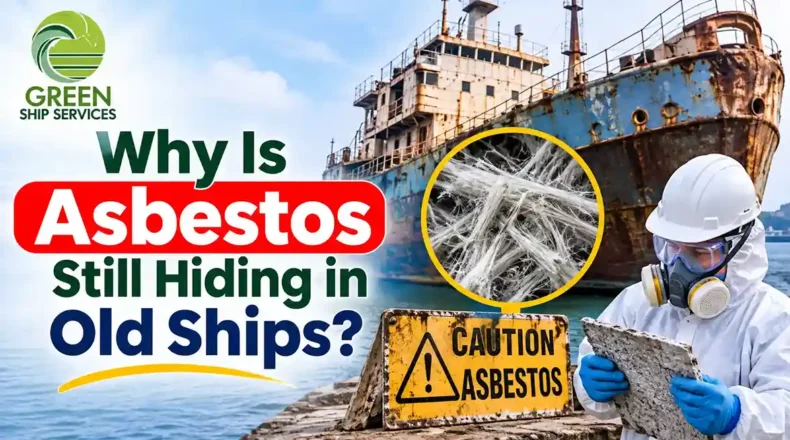
Ships carry more than cargo, machinery, and equipment. Many older vessels also contain hidden asbestos in insulation, fireproofing, gaskets, and other components. This dangerous material can threaten workers during maintenance and recycling. Understanding why asbestos remains onboard, where it hides, and how professionals identify it can help shipowners prevent exposure and manage hazardous materials responsibly.
Why Choose Asbestos Removal Service in India for Ships?
An Asbestos removal Service in India plays an important role in safer ship maintenance and recycling. But why do most ships still contain asbestos? Many older vessels used asbestos because of its heat resistance, insulation, and fire protection properties. Professional inspections, hazardous material identification, and controlled removal help protect workers and support responsible ship recycling.
Why Do Older Ships Still Contain Asbestos?
Asbestos was once widely used in shipbuilding because it offered excellent heat resistance, insulation, durability, and fire protection. Shipbuilders incorporated it into many components to improve onboard safety and equipment performance.
Although international rules now prohibit new asbestos installations, older vessels can still contain these materials. Furthermore, repairs using old or contaminated spare parts may introduce asbestos into ships that previously had none.
- Excellent Heat and Fire Resistance
Ships contain engines, boilers, exhaust systems, and high-temperature machinery. Asbestos offered strong thermal insulation and fire resistance.
Therefore, shipbuilders used it in:
- Boiler insulation
- Engine-room panels
- Exhaust pipe coverings
- Fire-resistant bulkheads
- Heat-protection materials
- Long-Lasting Insulation Properties
Asbestos could withstand demanding marine conditions. Its resistance to heat and wear made it attractive for older shipbuilding projects.
However, durability also meant that asbestos-containing materials could remain inside vessels for decades. Get consultant with us click: https://greenshipservices.in/contact-us/
- Widespread Use in Historical Shipbuilding
For much of the twentieth century, asbestos was a common industrial material. Many shipyards used it in construction, machinery, electrical installations, and maintenance components.
As a result, vessels built during that period may still contain asbestos in hidden locations.
- Repairs and Replacement Parts
An important concern involves repairs carried out after a vessel leaves the shipyard.
Older spare parts, replacement gaskets, insulation, and other components may introduce asbestos into vessels. Consequently, even ships with previous asbestos inspections may need further checks after major repairs.
Where Can Asbestos Hide Inside a Ship?
Asbestos does not always appear in visible panels or insulation sheets. It may remain concealed behind equipment, inside machinery, or within older building materials.
| Ship component | Possible asbestos-containing material |
| Engine room | Thermal insulation and gaskets |
| Boilers | Heat-resistant insulation |
| Pipes | Insulation and lagging |
| Electrical systems | Cable insulation and components |
| Fire protection systems | Fire blankets and panels |
| Machinery | Brake linings and friction materials |
| Doors and bulkheads | Fire-resistant boards and seals |
| Valves and pumps | Gaskets and packing materials |
Important: Never identify asbestos by appearance alone. Suspected materials need appropriate inspection and, where necessary, laboratory analysis by competent professionals.
Why Is Asbestos Dangerous During Ship Maintenance and Recycling?
Asbestos becomes especially dangerous when workers disturb materials containing its fibres.
Cutting, drilling, grinding, breaking, or removing damaged asbestos products can release microscopic fibres into the air. Workers may inhale these fibres without noticing them.
Long-term exposure can lead to serious diseases, including:
- Asbestosis
- Lung cancer
- Mesothelioma
- Other asbestos-related respiratory diseases
The danger increases during ship recycling because workers may dismantle insulation, machinery, walls, and other components.
Therefore, identifying asbestos before dismantling begins is essential for worker protection and environmental responsibility.
What International Rules Control Asbestos on Ships?
Understanding SOLAS Asbestos Restrictions
The International Maritime Organization (IMO) introduced restrictions through amendments to the International Convention for the Safety of Life at Sea (SOLAS).
Here is a simple timeline:
| Ship construction period | Asbestos requirements |
| Before 1 July 2002 | Existing asbestos materials may remain onboard, subject to proper management |
| 1 July 2002–31 December 2010 | New asbestos installations were generally prohibited, with limited exceptions |
| From 1 January 2011 | New asbestos installations are prohibited on all ships |
These restrictions explain why older vessels require careful inspection. However, the construction date alone cannot confirm whether a ship contains asbestos.
International Maritime Organization+1
Why Is a Professional Asbestos Inspection Before Ship Recycling Important?
A Professional asbestos inspection before ship recycling helps identify hazardous materials before workers begin dismantling operations.
It also helps shipowners and recycling facilities plan safe handling, removal, and disposal.
Key Benefits of a Professional Inspection
- Identifies hidden hazards: Experts examine machinery, insulation, panels, and other suspected materials.
- Protects workers: Early identification reduces the risk of accidental fibre exposure.
- Supports regulatory compliance: Inspection findings help inform hazardous material management plans.
- Improves recycling preparation: Ship recyclers can plan removal activities before dismantling.
- Supports waste management: Identified asbestos quantities help determine suitable handling and disposal arrangements.
What Does an Asbestos Survey Usually Include?
A professional survey may involve:
- Reviewing ship construction and maintenance records.
- Inspecting accessible machinery and compartments.
- Identifying suspected asbestos-containing materials (ACMs).
- Collecting samples using suitable safety procedures.
- Arranging laboratory analysis.
- Recording locations and estimated quantities.
- Preparing inspection findings and relevant documentation.
The scope depends on the vessel, survey requirements, accessibility, and applicable regulations.
How Does the Inventory of Hazardous Materials (IHM) Help?
The Inventory of Hazardous Materials (IHM) is an important document in responsible ship recycling.
It identifies hazardous materials onboard and records their locations and approximate quantities.
What Information Does an IHM Include?
An IHM generally covers three parts:
- Part I: Hazardous materials contained in the ship’s structure and equipment.
- Part II: Operationally generated wastes.
- Part III: Stores.
For ship recycling, an accurate IHM helps stakeholders understand the hazardous materials that require attention.
Furthermore, it supports the development of a Ship Recycling Plan and improves communication between shipowners, surveyors, and recycling facilities.
How Is Asbestos Safely Removed From Ships?
Asbestos removal requires trained professionals, suitable equipment, and controlled working conditions. It should never become an ordinary dismantling activity.
Important Safety Measures
- Engage specialised asbestos contractors.
- Restrict access to affected work areas.
- Use appropriate personal protective equipment (PPE).
- Apply suitable wet-removal procedures to control fibre release.
- Use appropriate containment and negative-pressure systems for onshore removal.
- Pack asbestos waste in leak-proof containers.
- Arrange disposal through authorised facilities.
India’s Recycling of Ships Regulations, 2026 specify specialised contractors, wet handling, negative-pressure enclosures for onshore removal, worker protection, and disposal at secured landfills under applicable State Pollution Control Board requirements.
dgshipping.gov.in+1
Never attempt to remove suspected asbestos yourself. Disturbing the material without proper controls can release hazardous fibres.
How Does Ship Recycling Hazardous Waste Management in India Work?
Effective Ship recycling hazardous waste management in India requires proper identification, segregation, storage, transportation, and disposal.
Essential Waste Management Practices
| Stage | Important activity |
| Inspection | Identify asbestos and other hazardous materials |
| Documentation | Record material locations and quantities |
| Segregation | Separate hazardous waste from ordinary scrap |
| Safe handling | Use trained workers and suitable PPE |
| Packaging | Use secure, leak-proof packaging for asbestos waste |
| Storage | Keep waste in authorised storage areas |
| Disposal | Use approved disposal facilities and follow applicable norms |
India’s Ship Recycling Act, 2019, and associated rules and regulations provide the regulatory framework for responsible ship recycling. The 2026 regulations further detail operational and environmental requirements.
Directorate General of Shipping+2
How to Choose Reliable Ship Asbestos Survey Companies in India?
Selecting experienced Ship asbestos survey companies in India is an important step before maintenance, repair, or recycling.
However, not every inspection provider offers the same technical expertise.
What Should You Check Before Hiring a Survey Company?
Consider these factors:
- Maritime experience: Check experience with commercial vessels and ship recycling.
- IHM expertise: Confirm knowledge of hazardous material identification and documentation.
- Inspection methodology: Ask how the team identifies and verifies suspected ACMs.
- Laboratory support: Check whether suitable laboratory analysis is available.
- Technical reporting: Look for clear material descriptions, locations, and quantities.
- Safety procedures: Confirm that inspections follow appropriate worker-protection measures.
- Regulatory knowledge: Check familiarity with applicable Indian and international requirements.
A reliable survey partner should explain the inspection scope, deliverables, and limitations before work begins.
Why Choose Greenship Services for Ship Recycling and IHM Support?
Greenship Services, led by Arjun Bannerjee, works in the ship recycling and hazardous materials survey sector.
For shipowners and maritime stakeholders, understanding asbestos risks is an important part of preparing vessels for responsible recycling.
A structured IHM process can help identify hazardous materials, improve documentation, and support informed planning before dismantling.
Whether you are preparing an older vessel for recycling or reviewing hazardous material documentation, professional guidance can help you understand the next steps.
Book ship asbestos inspection in India with an experienced survey provider to discuss your vessel’s inspection requirements, IHM scope, and hazardous material assessment needs.
Conclusion
Asbestos remains a hidden challenge in older vessels despite international restrictions on new installations. Therefore, professional inspections, accurate IHM documentation, and controlled removal are essential for safer ship recycling. Greenship Services, led by Arjun Bannerjee, supports informed hazardous material management and maritime survey planning. Identifying risks early helps protect workers, reduce environmental harm, and encourage responsible recycling.
Frequently Asked Questions About Asbestos on Ships
Why do older ships still contain asbestos?
Older ships contain asbestos because shipbuilders widely used it for insulation, fire protection, gaskets, and machinery components. Although regulations now prohibit new installations, existing materials may remain onboard.
Is asbestos completely banned on ships?
The IMO prohibits new asbestos installations on ships from 1 January 2011. However, older vessels may still contain existing asbestos-containing materials that require proper management.
How can shipowners identify asbestos onboard?
Shipowners can arrange professional asbestos surveys, review maintenance records, inspect suspected materials, and conduct laboratory testing where necessary.
Why is an IHM important before ship recycling?
An Inventory of Hazardous Materials identifies hazardous substances, their locations, and estimated quantities. It helps shipowners and recyclers plan safe handling and responsible disposal.
Who should remove asbestos from ships?
Only trained and suitably qualified specialist contractors should handle asbestos removal. They must follow applicable safety, containment, worker-protection, and waste-disposal requirements.
How can I book ship asbestos inspection in India?
Contact an experienced maritime survey provider to discuss vessel details, inspection requirements, IHM documentation, and the required survey scope.